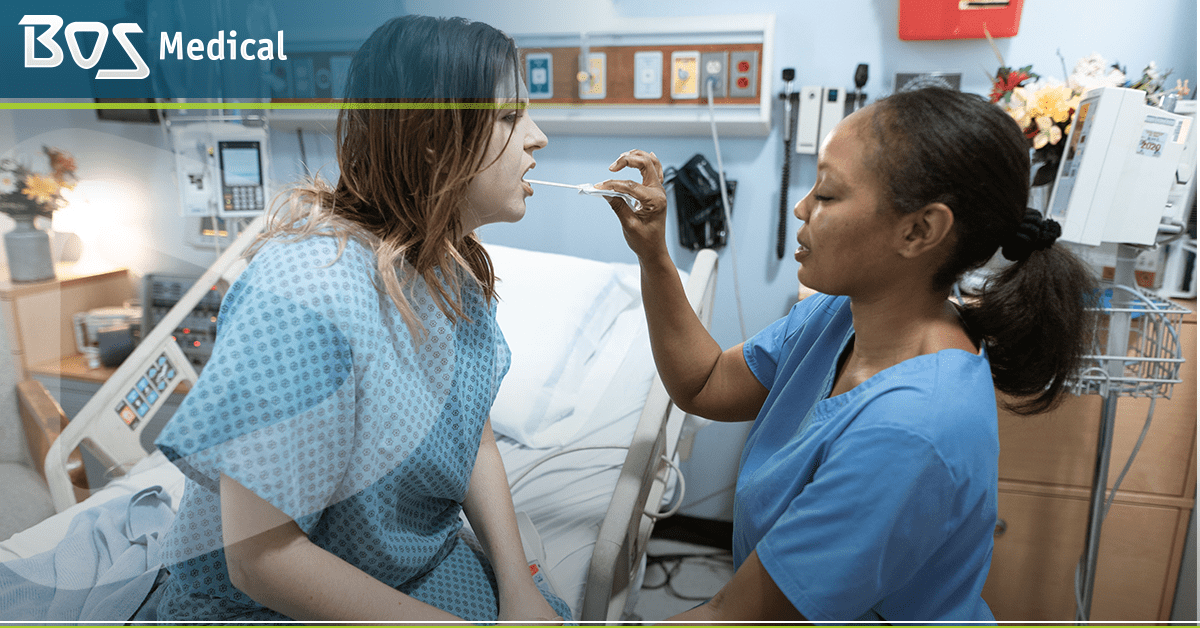
A career in nursing provides you with so many opportunities to choose your own path. What other career is as rewarding and dynamic as nursing? As a nurse, you’ll have job security, excellent earning potential, and you can choose the healthcare environment that aligns with your goals. Personal and professional development await on your path.
But how do you recognize the right path for you? And how do your credentials reflect your goals? If you’re a newly minted nurse or you’re seeking a change in your current path, we can help. By defining your nursing credentials and areas of interest, you can determine the direction in which you wish to proceed. Here are some ways you can identify your goals, find your path, and thrive in your nursing career.
Find the Rewards and Opportunities of A Career in Nursing
Nurses have a unique opportunity to see the results of their work, in one way or another, immediately. When you provide care, you’re tending to your patients’ physical and emotional needs. Your clinical prowess influences the direction of your patients’ health. You help your patients’ families understand diagnoses and prognosis, alerting them to the care their loved one will need. In many cases, nurses influence the health of entire communities.
There certainly are so many paths to choose when you pursue a degree in nursing. Before you determine the right path for you, take some time to reflect on where your interests lie. Likely, your experience, skills, and strengths will show you just what it is in nursing that excites you and propels you toward achieving your career goals.
Clinical skills can be learned, but determining those areas that interest and excite you points you toward a successful nursing career. Once you determine your interests, you’ll be on your way. Next, ensure that you have the proper credentials to pursue the right path.
What Your Credentials Mean for Your Nursing Career
Your nursing career is built on a foundation of your credentials. From the CNAs (Certified Nursing Assistant) and LPNs (licensed Practical Nurse) who provide basic patient care, to more advanced RNs (Registered Nurse), NPs (Nurse Practitioner), and leadership roles, nursing is a career in which you can continue to grow your skills and expertise as well as your earning potential. Your credentials tell the story of your skill level, your commitment, and your field of interest.
How Your Credentials Shape Your Nursing Career Path
New nurses, as well as those seasoned and experienced individuals who decide to transition to a different nursing career path, understand what certifications and degrees are necessary for both personal and professional growth as a nurse. Leveraging education and credentialing to specialize and advance in areas of healthcare is what leads nurses to a fulfilling career path. Here are some of these credentials, which will serve to shape you as a nurse.
CNA Training Program
A job as a CNA can be highly rewarding. You tend to your patients’ basic needs, such as hygiene and toileting, feeding and nutrition, and the like. The credentials you need to follow a career path as a CNA, following your high school graduation or GED completion, begin with completing a CNA training program. These trigrams are typically offered at vocational schools and community colleges. Some hospitals have their own CNA certification program.
In the 12-week program, you will master skills in the classroom and complete clinic hours. Once you’ve finished your CNA training, you have to take and pass a state-mandated test. At that point, you’ll receive certification, and your name will be added to the state registry of CNAs. Then you begin your career in nursing.
Associate’s Degree in Nursing (ADN) and LPN Certification
With an ADN degree or LPN certification, you can begin your career in 18-24 months. Your certification puts you on the path of direct patient care. As a high school graduate, you can apply to a state-approved school (usually a community college or vocational school) and enter the program for practical nursing. After learning skills in the classroom, you’re required to obtain clinical experience.
Upon completing the program, you will go through a criminal background check and have your fingerprints on file with the state. You will need to take and pass the NCLEX-PN, or National Council Licensure Exam for Practical Nurses, which is essential for beginning your LPN career.
Once you pass your NCLEX-PN, you apply to your state for licensure. Going forward, it is your responsibility to renew your license and obtain any further education that may apply to that renewal.
Bachelor of Science in Nursing (BSN)
To become a BSN/RN, you will need to complete your degree at an accredited college or university. Upon graduation, you’ll take and pass your NCLEX-RN and then apply to your state, or the state where you wish to work, for your license. You will need to have a criminal background check, proof of legal citizenship, and any other state-required documentation.
While pursuing your degree, you have the opportunity to find a specialization that interests you. These include pediatrics, maternal-fetal, critical care, oncology, mental health, trauma, surgery, labor and delivery, geriatrics, and neonatal, to name a few. Many of these specialties luffa additional certification and credentials. A BSN/RN also opens doors to advanced practice nursing roles such as NP, Nurse Midwife, and Nurse Anesthetist (CRNA), and helps determine the right path for you.
How to Match Your Credentials To the Right Path for You
Once you’ve received your nursing licensure and certification, you can build on that to further your career. By building additional credentials, you progress professionally and advance in your ability to earn. There are many ways you can determine the right path for you, simply by obtaining specialty certifications or advancing your degree.
Specialty Certifications
Voluntarily obtaining specialty certifications in areas such as critical care, pain management, pediatrics, and oncology exhibits your interest and expertise in those areas. These credentials boost your hiring ability and marketability, potential for earnings, eligibility for specializations, and professional growth opportunities. The American Nursing Association offers many ways to obtain your specialty certifications.
Advanced Degrees
The ability to advance your degree as a nurse is a wonderful way to grow professionally, and, for those who are currently working in the nursing field, an advanced degree helps you continue on the right path or move in a new direction. A Master’s Degree in Nursing (MSN) prepares you for more advanced roles, such as an NP, CRNA, or Nurse-Midwife.
With your MSN, you may also decide to branch off into education, informatics, or management, leadership, and advisory roles. Advancing your degree to this level exhibits a commitment that healthcare organizations and potential employers recognize. In the current nursing environment, an advanced degree is highly valued and valuable.
Accelerated Bridge Programs
Accelerated nursing bridge programs provide a path for current healthcare workers to obtain a higher degree or certification, building on their experience in the medical field. This allows CNAs, LPNs, RNs, and paramedics to advance their careers and add to their credentials without having to begin from scratch.
Many of these bridge programs offer flexible and hybrid (online/in-person) opportunities, keeping in mind your current work schedule. Using prior work and experience, the curriculum is condensed, with a focus on preparing the student for their licensure exam (NCLEX-RN, for example). When you complete an accelerated program and obtain your license, you can move your career forward as your path unfolds. Some of the bridge programs offered by accredited schools are:
- LPN to RN: Advancing from LPN to RN through a bridge program typically takes 12-24 months to obtain the required nursing credentials. Going further, you may decide to pursue your LPN to BSN, which may take two to four years to complete, as it involves obtaining a Bachelor of Science in Nursing degree. The time it takes you depends on the school, the program’s prerequisites, and your personal pace. It may take longer if you have additional obligations, such as work and a family.
- RN to BSN: Advancing your degree from RN to BSN opens more opportunities in your career. The program you choose depends on the amount of time you are able to commit. A full-time bridge program for RN to BSN can take as little as eight to 18 months, depending on the school. For part-time students, the program may take up to 2 years.
- BSN to MSN: This is a very common program for those nurses with a BSN degree who wish to go into a more advanced career, such as CRNA, Midwife, informatics, education, or NP. The typical time it takes to advance from BSN to MSN depends on your specialization, availability, and the university’s curricula structure. You may advance your degree in 18-36 months for a clinical degree, or 12-24 months for a non-clinical role. In order to fast-track advancing your degree, many universities offer the bulk of your classes online. If clinical hours are required, you are usually responsible for finding an acceptable preceptor scenario.
The key features of an accelerated bridge program are the flexibility of a program targeted to working professionals, recognition for clinical experience, and career advancement opportunities. The condensed course load, combined with the hybrid format (online/in-person), may be intense, but keep in mind, the purpose is to accelerate your degree.
There is No One Right Path
It’s important to remember there is no one right path for your career in nursing, nor is there a right degree, certifications, or credentials. In fact, in healthcare, it’s advantageous to follow your interests and passions. A CNA is just as important as an NP when it comes to patient care. The sheer variety of opportunities is what makes nursing such an exciting career. And it may also complicate your plans, even just a little bit.
You don’t need to decide the path you want to follow at the onset. You may refine your goals as you gain experience, building on your credentials as necessary. When you take the time to reflect on your strengths and skills, both soft and clinical, the right path for you may come into focus.
Earn while you learn as you advance your degree and nursing credentials. Reach out to BOS Medical Staffing for the nursing position that suits your needs. We offer full-time and part-time opportunities to suit your schedule. Please contact us today and let us help determine the right path for you.