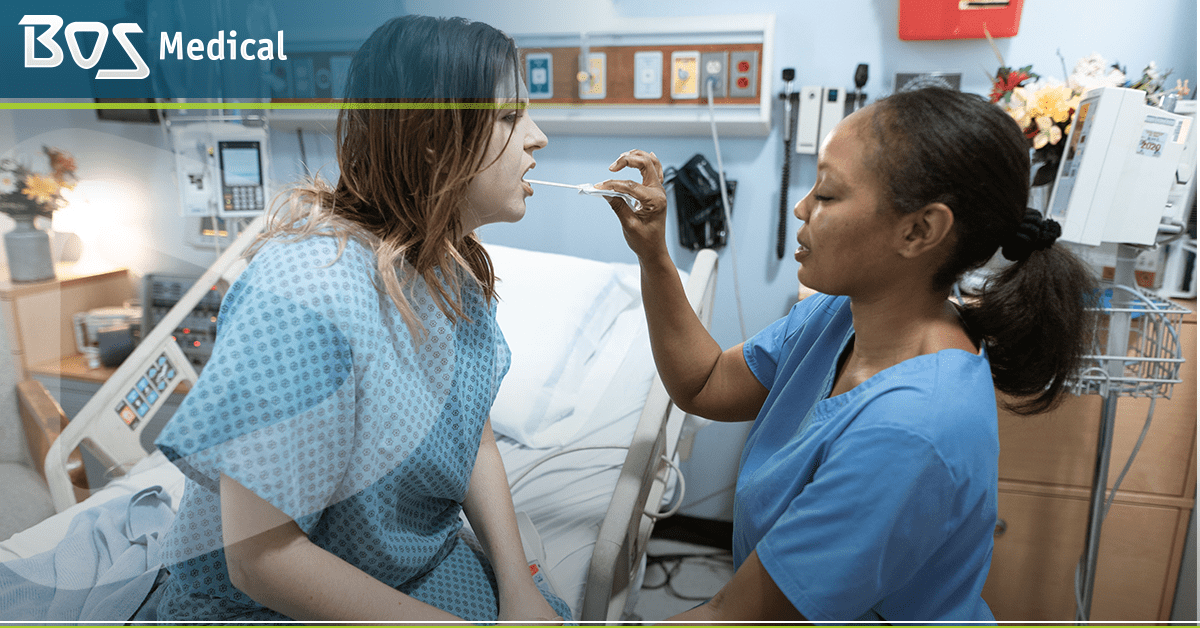
As a Licensed Practical Nurse, your career revolves around a type of foundational patient care. You spend your shift monitoring vital signs, dressing wounds, administering medication, and providing assistance in everything from meals to bathing, ambulation to toileting. Your responsibilities and tasks are crucial to the comfort and wellness of your patients.
LPNs work under the direct supervision of RNs and doctors, and focus on direct patient care. RNs have a larger scope of care and greater independence in exercising their responsibilities. Depending on the type of healthcare environment in which they work, a Registered Nurse may assess patients and develop care plans, make clinical judgments based on their skills, and delegate tasks to LPNs and CNAs.
Based on data posted by the Bureau of Labor Statistics, RNs earn roughly $30,000 more annually than LPNs. Depending on where you want to go in your nursing career, the credentials matter a great deal.
Consider a Bridge Program
If you want to transition from LPN to RN and broaden the scope of your career, there are a few ways to do that without hitting pause. Increase your earning potential and your knowledge and skills by transitioning from LPN to RN through a bridge program.
You’re probably familiar with bridge programs. They are a fast track to advancing your degree, given your experience as a nurse. Bridge programs offer an opportunity to rely on that experience, removing the need to repeat the fundamental skills of nursing as part of your curriculum.
ADN or BSN?
The most common bridge program for LPNs is the LPN-to-RN path. Through this program, you can receive either an Associate’s Degree in Nursing (ADN) or a Bachelor of Science in Nursing (BSN). Bridge programs are typically much shorter than traditional programs. Advancing to an ADN from an LPN generally takes 12-18 months to complete. For those who wish to earn their BSN, the commitment is usually two to three years.
A BSN means greater opportunities with hospitals and healthcare organizations. If your career goals go beyond staff nurse and focus on advancing, a BSN helps facilitate that growth. With a BSN, you can set your sights on becoming a nurse educator, nurse manager, charge nurse, and even advance to NP or PA one day in the future.
How to Make the Transition Without Hitting Pause
Making the transition from LPN to RN makes sense if you want a career in nursing, but most people rely on their paycheck and aren’t able to commit to a full-time program. The good news is you can pursue your advanced degree through a bridge program while you work.
Colleges and universities understand you can’t simply shut down your job while you advance your degree. Many fully-accredited programs offer online courses with clinical hours close to home. Pre-recorded lectures, online study groups, independent research, and self-paced learning mean you can work and work on your degree at the same time.
These flexible formats are designed specifically to accommodate working nurses. There are a few caveats before your run to the registrar’s office, however. First, make sure the program you want has accreditation from the Accreditation Commission for Education in Nursing (ACEN) and the Commission on Collegiate Nursing Education (CCNE). Also, make sure your program is approved by your state’s board of nursing. Without these accreditations and your state’s board approval, you won’t be able to sit for the NCLEX-RN.
Passing the NCLEX-RN
The NCLEX-RN is the exam that qualifies you as a licensed RN. It is different from the NCLEX-PN you took to obtain your LPN license. The NCLEX-RN focuses on the more clinical aspects of nursing and emphasizes your judgment in clinical settings, as well as your ability to prioritize and delegate.
What many LPNs transitioning to RN don’t realize is that they have amassed a good deal of experience in patient care that will serve them well when they take the NCLEX-RN. However, you will still need to set aside about six weeks of dedicated and consistent study time after your graduation. Time to call in some favors!
Don’t Hit Pause-We Can Help
If you wish to transition from LPN to RN without hitting pause on your career, please reach out to BOS Medical Staffing. We offer full-time, part-time, and per diem opportunities for LPNs so you can continue to earn while you learn. Contact us today and find out why we’re the preferred staffing agency for nurses throughout the Southeast.